





British Embassies: their diplomatic and architectural history

British Embassies: their diplomatic and architectural history, James Stourton, photographs by Luke White, Frances Lincoln, 2017, (351 pages, 15 black-and-white and 260 colour illustrations).
How can Britishness be articulated and deciphered in a building? This question is just as relevant to the design of diplomatic missions as of central government offices. Embassies are national aspirations cast in stone, decorated and furnished to represent the country’s identity. Following the success of his Great Houses of London (2012), the former chairman of Sotheby’s UK, James Stourton, has gone on a tour across five continents to visit 27 British embassies (including Brussels, Moscow, Tehran, New Delhi, Tokyo, Brasilia and Buenos Aires), and to study their architecture and the histories behind them.
He returns with a lavishly illustrated compendium, packed with first-hand information about the cheerful as well as humiliating moments in every compound’s eventful past. Telling the story of each foreign mission in chronological order, he begins with Britain’s first chancelleries abroad: Paris, Constantinople and Vienna, 19th-century capitals of empires and hothouses of diplomatic activity.
The earliest two residences (Hôtel Charost in Paris and Pera House in the Ottoman capital) occupied mansions leased from the host country. It was not until 1844 that work on Britain’s first purpose-built embassy began, to replace its burned-down residence above the Bosporus. The Foreign Office advice to keep costs down by saving on decoration was paid lip service by architect William James Smith, whose design set in motion a lasting diplomatic tradition of representation with a capital ‘R’ and a proclivity for exploding budgets. It generated a wealth of proud footholds such as the powerful statement of a Victorian country house in Cairo or the grandeur of Edwin Lutyens’ embassy in Washington. In their designs, we can find stereotypically British-adopted architectural features such as Palladian windows or broken pediments (interior and exterior). We can also detect representation in both directions: representing Britain while reflecting the architectural tradition of the host country.
The result: in Tunis, a dream of 1001 Nights in blue tiles and arabesque patterns merged with the soberness of Georgian-style doorframes; in Addis Ababa, traditional Tukul huts alongside English country-cottage-style and garden layout; in Rome, Basil Spence’s modernist interpretation of an Italian mannerist palazzo in concrete. The Edwardian exuberance of ballrooms and elegance of drawing rooms often differs remarkably from the rather more sordid business of intelligence gathering and military meddling conducted behind the facade, as the deliciously informative text reveals. One can find priceless quotations, particularly from the Churchill, Thatcher and Blair eras, and encounter familiar faces – such as those of agent Kim Philby. Even architecturally speaking, this book contains subtle messages: an embassy, like other buildings of age, has its unique history, which entails initial design, changes, additions and adaptations.
British Embassies serves as a reminder to anybody involved in conservation that all phases and features have their place in the sometimes-complex story of a building and deserve respect. This book will appeal to anybody interested in historic buildings, historic interiors or diplomatic history, particularly to those interested in all three subject areas.
This article originally appeared as ‘Being British Abroad’ in IHBC's Context 163 (Page 55), published by The Institute of Historic Building Conservation in March 2020. It was written by Michael Asselmeyer, an historian and Architect.
--Institute of Historic Building Conservation
Related articles on Designing Buildings Wiki
IHBC NewsBlog
IHBC sponsors Gardens Trust event 23-4 Sept 2026
.jpeg)
'Learning from the Past, Shaping the Future’ takes place in Milton Keynes
Renovations to Frank Lloyd Wright's Fallingwater complete
.jpg)
World Heritage Preserved project opens house for tours again
Shakespeare Birthplace Trust places Hall's Croft on HAR Register
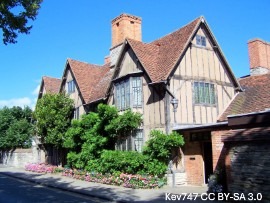
Stratford-upon-Avon home of Shakespeare's daughter is 'At Risk'
Lady Grange’s House repaired on St Kilda
.jpg)
National Trust for Scotland repairs stone cleit with link to famous island resident
Griff Rhys Jones on BBC Radio 4 Today programme
,_Green_Lane,_Derby.jpg)
The Victorian Society’s President unveiled its latest Top Ten Endangered Buildings 2026.
Need a MATE? Book your place now.

IHBC offers free webinars on applying for IHBC accreditation (Full & Associate).
UK Stained Glass Repository finds windows new homes
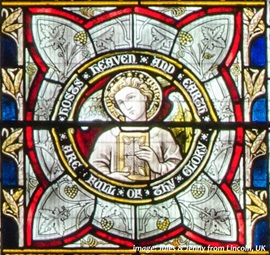
How are stained glass windows are rescued, stored and repurposed?
APPGEBE report sets high aims for quality
'Government must not sacrifice quality in drive to build 1.5m homes'
New measures protect Historic Shipwrecks from heritage crime

Underwater cultural heritage benefits from new HE guidance
How could the City of London skyline look in 6 years' time?

Visualisation shows approved planning applications as completed buildings
National Trust for Scotland calls for VAT cuts
Heritage neglect is encouraged by current policies
IHBC's 'Context' Issue 186 features Industrial Heritage
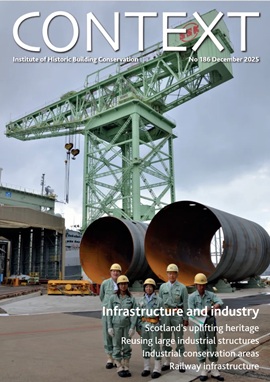
IHBC's members' journal reports on the challenges of conserving infrastructure
Book now for IHBC Annual School 2026
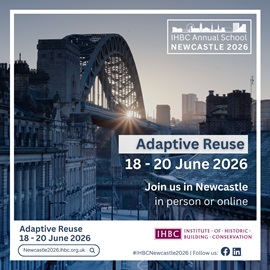
IHBC Annual School is taking place 18-20 June 2026 in Newcastle
RICHeS Research Infrastructure offers ‘Full Access Fund Call’
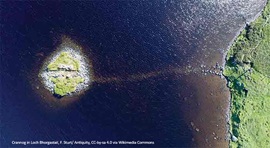
RICHeS offers a ‘Help’ webinar on 11 March
Latest IHBC Issue of Context features Roofing
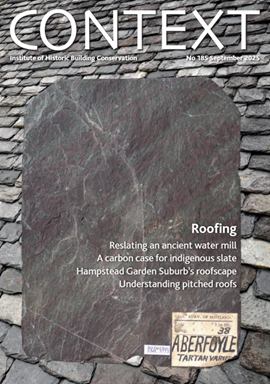
Articles range from slate to pitched roofs, and carbon impact to solar generation to roofscapes
Three reasons not to demolish Edinburgh’s Argyle House

Should 'Edinburgh's ugliest building' be saved?
IHBC’s 2025 Parliamentary Briefing...from Crafts in Crisis to Rubbish Retrofit
IHBC launches research-led ‘5 Commitments to Help Heritage Skills in Conservation’
How RDSAP 10.2 impacts EPC assessments in traditional buildings

Energy performance certificates (EPCs) tell us how energy efficient our buildings are, but the way these certificates are generated has changed.